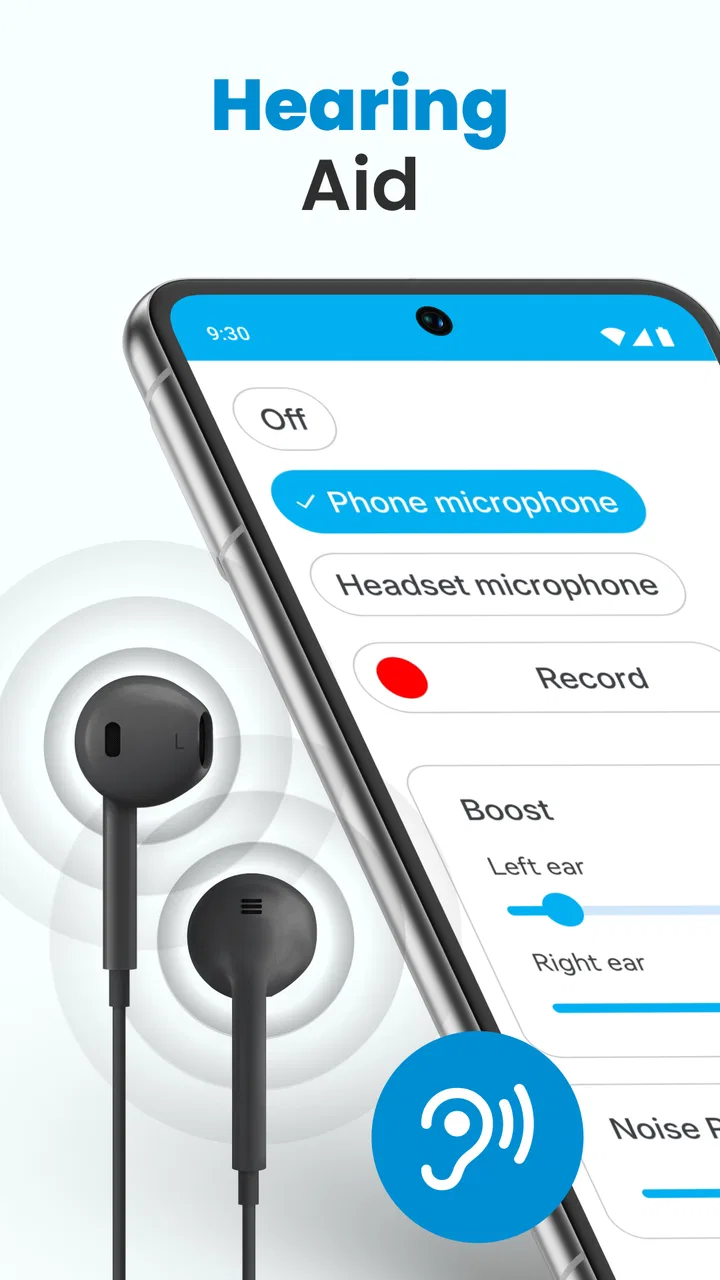
Hearing Aid App for Android
- 3.9
- Rating
- 1.00M
- Installs
- Free
- Price

 Analysis by App-foxy
I approached Hearing Aid App as a practical Android accessibility tool rather than a replacement for medical care. Its promise is straightforward: help make nearby sound easier to hear through a phone. That makes it immediately interesting for people who occasionally struggle with conversations, television audio, or quiet voices, but the real test is whether it remains useful after the first few days of curiosity.
My overall impression is mixed but worthwhile. The app is free to install, comes from Firehawk, and sits in the medical category. It has passed the initial popularity test with over a million installs, while its average rating is 3.9 from around nine thousand ratings. Those figures suggest a product that helps some users while leaving others frustrated, which feels believable for an app that depends so heavily on a phone’s microphone, speaker, surroundings, and the user’s particular hearing needs.
What the first week feels like
The appeal is easy to understand during the first use. A smartphone is already something most people carry, so turning it into a basic listening aid feels more convenient than buying a dedicated device immediately. I can imagine opening it before a conversation, placing the phone where it can pick up sound, and checking whether speech becomes easier to follow. That low barrier is the strongest reason to try it.
You May Also Like

 Blood Strike: 2.5 Anniversary
Blood Strike’s Loadouts Turn Every Drop Into a Tactical Gamble
A close look at Blood Strike’s custom loadouts: how fast access to signature weapons reshapes its battle royale rhythm, rewards preparation, and narrows the gap between fights.

 Pandora - Music & Podcasts
Pandora’s Music Is Easy to Start, but Harder to Recover
Pandora’s strength is its low-effort path from a seed to a station. Its weak spot is how much confidence it asks you to place in connection, setup, and quiet recovery.

 8 Ball Pool
 Is Built on Rivalries, Rematches, and Routine
A close look at the rivalries, rematches, shared routines, and unanswered safety questions that turn a quick pool match into a persistent mobile community.

 Samsung Music
’s Quiet Strength Is Playing What You Already Own
Its reach comes less from spectacle than from dependable access to a personal library. That simplicity is both the app’s strongest retention engine and its ceiling.

 AccuWeather: Weather Radar
AccuWeather Review: A Quick, Clear Forecast for Everyday Decisions
For everyday plans, the best forecast is the one you can understand quickly. AccuWeather makes rain timing, radar, and local conditions easy to act on, with a few trade-offs.

 Hill Climb Racing
Why Hill Climb Racing Still Turns Crashes Into One More Run
A tiny car, a bumpy hill and one more upgrade: Hill Climb Racing keeps resurfacing because its simple chaos makes every near-miss feel personal.
More From Our News Desk



The most useful early test is not a noisy restaurant or a crowded street. I would begin in a quiet room with one familiar speaker, then compare normal listening with the app active. This gives a better sense of whether the phone is helping or merely making sound louder. It also prevents the common mistake of judging an amplification tool by volume alone. Louder audio is not automatically clearer audio.
A realistic everyday scenario is watching television with a family member. Instead of asking everyone else to raise the volume, I could place the Android phone closer to the television or speaker and listen through the phone’s output, depending on the setup. That may help when the main problem is distance. It is less convincing when the room contains several competing sounds, because the microphone cannot automatically understand which voice matters most.
That distinction is important. The app’s store summary describes it as solving hearing problems, but I would treat that as a broad convenience claim, not a diagnosis or a guarantee. Hearing loss has many causes, and an app cannot establish whether the issue comes from wax buildup, infection, age-related change, medication, or another condition. Sudden hearing loss, pain, dizziness, or one-sided changes deserve medical attention rather than experimentation with an amplifier.
The first week is also when I would decide whether the phone’s physical design works for me. A handset needs to be positioned sensibly, and the speaker must be close enough to hear without creating an awkward setup. If I need both hands free, move around frequently, or keep the phone in my pocket, the experience becomes less practical. This is a phone-based workaround, so the phone remains part of the inconvenience.
I would also test it with different voices and distances instead of relying on one successful demonstration. A calm conversation across a table tells me more than a short trial with a loud recording. I would try a family member, a television, and a quiet public setting, stopping if the sound becomes uncomfortable. The best early habit is to adjust gradually, not chase maximum loudness.
Who benefits most at this stage
This app makes the most sense for someone with occasional difficulty hearing speech in a quiet environment, a person exploring possible accessibility tools, or a family member looking for a temporary aid while arranging professional advice. It may also suit someone who wants an inexpensive experiment before considering dedicated hearing equipment.
I would be more cautious recommending it to a person with significant hearing loss, severe tinnitus, balance symptoms, or a need for reliable performance throughout the day. A medical hearing aid is designed around fitting, consistency, comfort, and specific hearing patterns. A general Android app cannot reasonably offer the same level of personalization simply because it uses a phone microphone and audio output.
Whether it earns a place after the novelty fades
The second question is not whether the app can seem helpful once. It is whether I would remember to use it next month. That depends on having a repeatable situation where it solves a real problem. If I only open it to demonstrate the concept, it will probably disappear from my routine. If it consistently helps with television, one-to-one conversations, or listening from another part of a quiet room, it has a clearer reason to stay installed.
For recurring use, I would create a simple personal workflow. Before a conversation, I would place the phone where it can capture the speaker without being covered, start at a comfortable level, and keep the setup stable. Afterward, I would close the app and return the phone to normal use. This may sound obvious, but reducing the number of steps matters more than discovering a clever setting once.
The app’s free entry point helps with that experiment. I can evaluate whether it belongs in my routine without committing to the cost of dedicated hardware. At the same time, the presence of in-app purchases ranging from ninety-nine cents to ninety-nine dollars and ninety-nine cents per item means I would review any purchase screen carefully before paying. Free installation does not mean every part of the experience is necessarily free.
That pricing range also changes how I judge long-term value. A small optional purchase might be reasonable if it removes a genuine annoyance, but a higher-priced item deserves comparison with alternatives, including professional hearing services and purpose-built devices. I would not buy anything simply because the app made a strong first impression. The right question is whether the paid option improves a repeated use case enough to justify its cost.
There is a useful trade-off here. A phone app offers availability and flexibility, while a dedicated hearing aid offers a more focused experience. The app may be better for occasional listening support, travel, or testing whether amplification helps. A professionally fitted device is the stronger choice for daily communication, work meetings, group conversations, and situations where missing words has serious consequences.
Another month-to-month consideration is whether the user’s hearing needs remain stable. If the app seems less effective over time, that does not automatically mean the software has failed. Hearing can change, the phone may be positioned differently, the environment may be noisier, or the user may have become accustomed to the effect. A recurring drop in clarity is a reason to reassess the hearing problem, not simply increase the volume.
Small habits that improve the experience
I would avoid placing the phone directly against a loud source. That can make the output harsh and may create feedback or an uncomfortable loop between microphone and speaker. Keeping some distance while maintaining a clear path to the speaker usually gives a more natural test. I would also avoid covering the microphone with a case, hand, or fabric, since a phone cannot amplify sound it cannot capture cleanly.
For conversations, I would ask the other person to face the phone and speak normally rather than shouting. Shouting can distort speech and make the result more tiring. In a quiet room, a normal speaking voice provides a better basis for judging clarity. If the app only seems useful when someone raises their voice, I would question whether it is solving the underlying problem.
I would treat headphones cautiously. They may make the output easier to hear in some setups, but the result depends on the Android phone, the accessory, and the way the app routes audio. I would begin at a low level and stop if the sound feels sharp, pressurized, or tiring. The goal is comfortable speech, not the loudest possible signal.
One non-obvious benefit of this approach is that it can reveal which situations are actually difficult. After trying the app in several places, I might discover that distance is the main issue in the living room, while background noise is the real problem in a café. That distinction helps me choose the next step more intelligently. If distance is the issue, positioning may help; if noise is the issue, a general amplifier may have limited value.
Maintenance, friction, and listening fatigue
The maintenance burden is not just technical. It is behavioral. I need to remember to open the app, position the phone, keep the sound comfortable, and put everything away afterward. A dedicated hearing aid is also maintained, of course, but it is designed to remain part of the user’s daily routine. With a phone app, the extra setup can become irritating when I am already trying to follow a conversation.
The phone itself can interrupt the experience. Calls, notifications, low battery, accidental touches, or simply needing the handset for another task can make the arrangement less dependable. I would not rely on it as my only support during an important appointment or an event where missing speech would matter. A tool that competes with the device’s other jobs has a practical ceiling.
There is also a social maintenance cost. Holding or placing a phone near another person may require explanation, especially in a group. Some users will not mind, while others may feel self-conscious. That does not make the app ineffective, but it affects whether it will be used consistently. The best accessibility tool is often the one a person feels comfortable using in public, not merely the one that works under ideal conditions.
Listening fatigue is another serious limitation. Amplified sound can be tiring when speech, background noise, and room reflections are all raised together. If I finish a session feeling tense or drained, I would reduce the level, shorten the session, or stop using the app in that environment. Discomfort is not evidence that I need to push through; it is useful feedback.
I would also be careful around children and other people who may not be able to judge loudness reliably. The content rating is Everyone, but that rating describes suitability of the app’s content, not a guarantee that every volume level is safe for every listener. I would supervise use and keep the sound conservative, especially when testing an unfamiliar phone or accessory.
Firehawk’s app is compatible with Android devices running at least version 5.0, which covers a wide range of phones. Compatibility on paper does not guarantee identical results across every handset, though. Microphone quality, speaker placement, audio processing, and the phone’s age can all change the experience. I would judge the actual device I plan to use rather than assuming that another Android phone will behave the same way.
The current version is 2.1.2, and I would keep an eye on updates in the normal way, particularly if the app becomes part of a regular routine. Updates can improve stability, but they can also alter controls or behavior. For a medical-adjacent tool, I prefer to notice changes before an important listening situation rather than discover them in the middle of one.
Where the app starts to feel tiring
The biggest source of fatigue is uncertainty. Before each use, I may need to wonder whether the phone is in the right place, whether the sound is clear, and whether the person speaking is being captured properly. That is manageable for a short conversation, but it becomes burdensome when I need support from morning to night.
Noise is the second problem. In a busy environment, more amplification can make every sound compete for attention. This is where a dedicated hearing solution, professional assessment, or a quieter location may be better. I would not judge the app harshly for failing to perform like specialized equipment, but I would be honest about the boundary: it is most persuasive when the listening situation is controlled.
I would skip it as a primary solution if I regularly need to hear several people at once, move around while listening, or depend on precise speech in professional settings. It is also not the right response to unexplained or rapidly changing hearing symptoms. In those cases, its low price and convenience should not delay proper evaluation.
My long-term verdict
Hearing Aid App earns a place on my Android phone only when I can name the situation it improves. Its lasting value is not in novelty, and I would not keep it installed merely because the idea is clever. I would keep it for a recurring, quiet-room need where placing the phone near the speaker genuinely makes speech easier to follow.
The app is free, rated for Everyone, and developed by Firehawk, so it is approachable for a broad audience. Its medical classification is a useful reminder to take hearing concerns seriously, not a reason to treat the app as a clinical device. The average rating of 3.9 reflects the sensible middle ground: it can be useful, but results are likely to vary with the phone, environment, and listener.
My recommendation is to test it methodically over several ordinary situations. Start quietly, compare clarity rather than volume, try different distances, and note whether the setup remains comfortable after more than a few minutes. If it helps repeatedly without creating fatigue, it may be a practical temporary or occasional aid. If it only works at uncomfortable volume or requires constant adjustment, uninstalling it is a reasonable conclusion.
For someone deciding between this app and a conventional hearing aid, I would frame the choice around frequency and consequence. Occasional difficulty in a calm setting makes the app worth trying. Daily hearing difficulty, noisy environments, or symptoms that are new or concerning point toward professional advice and purpose-built equipment. The phone solution is convenient, but convenience should support good hearing decisions rather than replace them.
In short, I see this as a useful experiment with a clear practical niche, not an all-purpose answer to hearing loss. It can earn lasting space when it fits a simple routine and solves a specific problem. Once the novelty fades, its value depends on comfort, dependable positioning, and whether the user can return to it without friction. That is a modest promise, but for the right Android user, it can still be a worthwhile one.
FAQs for Hearing Aid App for Android
01What features does the Hearing Aid App offer?
The Hearing Aid App offers a range of features designed to enhance auditory experiences. It includes real-time sound amplification, customizable sound profiles, noise reduction, and directional microphone controls. Additionally, it provides options for frequency adjustment to cater to different hearing needs, ensuring users have a tailored listening experience.
02Is the Hearing Aid App compatible with all Android devices?
While the Hearing Aid App is designed to work on a wide range of Android devices, compatibility may vary depending on the Android version and specific hardware capabilities. It's advisable to check the app’s requirements and ensure your device meets them before downloading to guarantee optimal performance.
03Does the Hearing Aid App require internet access to function?
No, the Hearing Aid App primarily functions offline, allowing users to amplify sounds and adjust settings without an internet connection. However, certain features like updates or cloud storage for personalized settings may require internet access. Users can enjoy enhanced hearing without constant connectivity.
04How user-friendly is the interface of the Hearing Aid App?
The Hearing Aid App features a user-friendly interface designed to be intuitive for users of all ages. It offers easy navigation through simple menus and clear instructions, making it accessible to those who may not be tech-savvy. The app also provides tutorials to help new users get started.
05Are there any privacy concerns with using the Hearing Aid App?
The Hearing Aid App is committed to user privacy, employing strict security measures to protect user data. It does not store personal information without consent and ensures that any data collected, such as sound profiles, is used only to improve the app's functionality. Users can review the privacy policy for more details.
Pros
- Easy to use interface for quick setup.
- Customizable sound profiles for different needs.
- Compatible with most Android devices.
- Real-time noise reduction for clarity.
- Low battery consumption for extended use.
Cons
- Limited features in the free version.
- May require calibration for optimal use.
- Not suitable for severe hearing loss.
- Background noise can still interfere.
- Occasional connectivity issues reported.

Hearing Aid App for Android
Gallery